

近日,杭州具身智能初创公司磐虎智能宣布完成数千万元人民币天使轮融资,由普华资本、恒择资本联合投资。本轮资金将主要用于TigerMind多维感官认知世界模型、端侧智能及产业级具身智能系统等核心技术研发,并推进与产业伙伴在真实场景中的联合验证。该公司成立于2026年7月,由浙江大学控制科学与工程学院教授侯迪波创立,联合创始人林锋曾任阿里巴巴B2B搜索和广告CTO、蚂蚁集团创新实验室负责人及钉钉副总裁。
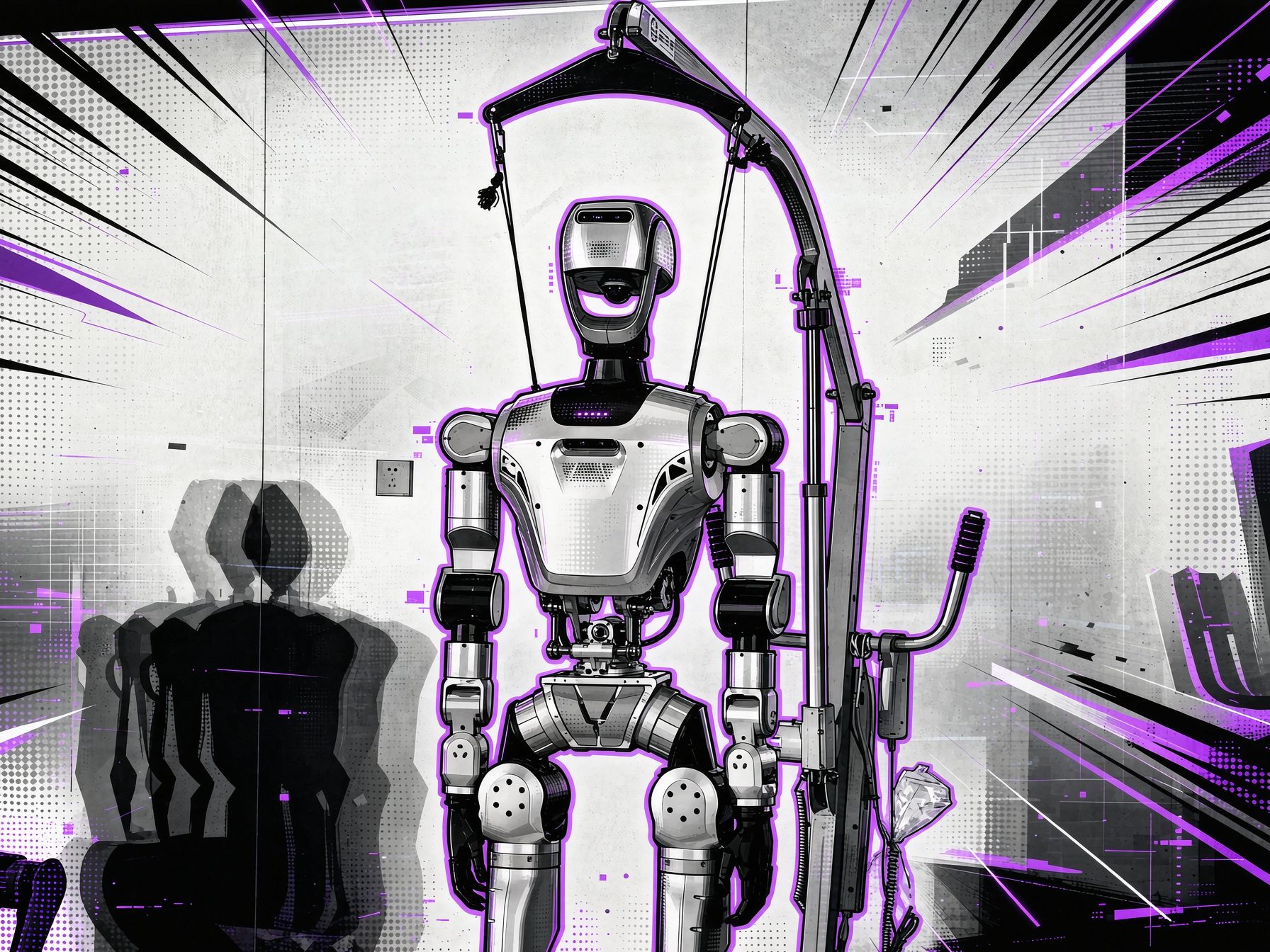
Recently, Hangzhou embodied intelligence startup TigerX announced completion of a tens-of-millions-yuan angel round, jointly invested by Puhua Capital and Hengze Capital. Funds will mainly be used for R&D of the TigerMind multi-dimensional sensory cognitive world model, edge intelligence, and industrial-grade embodied intelligence systems, and to advance joint validation with industry partners in real scenarios. The company was founded in July 2026 by Hou Dibo, professor at Zhejiang University's College of Control Science and Engineering; co-founder Lin Feng previously served as Alibaba B2B search and advertising CTO, Ant Group Innovation Lab head, and DingTalk vice president.
团队试图从底层能力切入,提出物理交互智能理念,强调机器人需融合视觉、力觉、触觉等多维感知,理解物理状态并预测动作结果,而非仅执行预设程序。目前,磐虎智能正构建以TigerMind世界模型为核心的技术体系,布局多维感知融合、因果推理与技能学习、高层认知与底层控制协同等方向,并启动磐石计划,与城市公共事业、工业基础设施、智能家居康养等领域伙伴开展场景共创,探索地下空间巡检、厨房操作等真实场景落地。
The team attempts to enter from foundational capabilities, proposing the "Physical Interaction Intelligence" concept, emphasizing robots need to fuse multi-dimensional perception including vision, force sensing, and touch, understand physical states and predict action outcomes rather than merely executing preset programs. Currently, TigerX is building a technical system centered on the TigerMind world model,布局 multi-dimensional perception fusion, causal reasoning and skill learning, and high-level cognition and low-level control collaboration, and has launched the "Rock Plan" to conduct scenario co-creation with partners in urban public utilities, industrial infrastructure, and smart home healthcare, exploring real-scenario deployment including underground space inspection and kitchen operations.
这个团队组合值得单独看。侯迪波是浙大控制科学与工程学院教授,林锋是阿里系高管,一个来自高校实验室,一个来自互联网大厂。这个组合和前面讨论的浙大科技园孵化NEXFORM新元体、哈工深孵化若愚科技、清华系团队做芯际无限是同一个模式的不同表现。高校提供技术积累和科研人才,大厂提供工程化能力和商业化经验。林锋在阿里B2B搜索和广告、蚂蚁创新实验室、钉钉的履历,覆盖了搜索算法、创新业务和商业化落地三个方向,这些经验对一家具身智能公司从技术走向产品是有用的。
This team combination deserves separate attention. Hou Dibo is a professor at Zhejiang University's College of Control Science and Engineering; Lin Feng is an Alibaba executive—one from a university lab, one from an internet giant. This combination, alongside the previously discussed Zhejiang University Science Park incubating NEXFORM, HIT Shenzhen incubating Ruoyu Technology, and Tsinghua-affiliated team doing Xinji Wuxian, are different manifestations of the same model. Universities provide technical accumulation and research talent; big companies provide engineering capability and commercialization experience. Lin Feng's resume across Alibaba B2B search and advertising, Ant Innovation Lab, and DingTalk covers three directions—search algorithms, innovative business, and commercialization deployment—experience useful for an embodied intelligence company moving from technology to product.
物理交互智能这个提法,和前面讨论的机器人大脑方向有交集。前面讨论过格物通智研究机器人理解物体及操作中的物理变化,也讨论过跨维智能的UNITAS用三维物理空间作为统一表示,还讨论过星尘智能的绳驱机器人让力对AI几乎完全透明。磐虎智能强调的是融合视觉、力觉、触觉等多维感知,理解物理状态并预测动作结果。这个方向和前面讨论的触觉传感器、六维力检测、灵巧手力控是同一个问题的不同层面。感知层负责采集多维数据,大脑层负责理解物理状态和预测动作结果,执行层负责完成操作。磐虎智能选择的是大脑层,同时布局多维感知融合。
The "Physical Interaction Intelligence" formulation intersects with the robot brain directions discussed earlier. Earlier we discussed Gewu Tongzhi researching robots understanding objects and physical changes during manipulation, DexForce's UNITAS using 3D physical space as unified representation, and Astribot's cable-driven robots making force almost completely transparent to AI. TigerX emphasizes fusing multi-dimensional perception including vision, force sensing, and touch, understanding physical states and predicting action outcomes. This direction operates at different levels of the same problem as the previously discussed tactile sensors, six-axis force detection, and dexterous hand force control. The perception layer collects multi-dimensional data, the brain layer understands physical states and predicts action outcomes, and the execution layer completes operations. TigerX chooses the brain layer while布局 multi-dimensional perception fusion.
需要留意的是,报道里明确写了,相关世界模型性能、跨场景迁移效果及商业项目规模仍处研发与验证阶段,尚未披露具体客户名称及运行数据,后续产业化进展仍待观察。这个提示很重要。前面讨论过硅谷和五道口的两种造神运动,也讨论过融资降温和IPO暂缓。一家成立仅三个月的公司拿到数千万元天使轮,这个融资节奏在具身智能行业里不算罕见,但它的技术能力和商业化进展还需要时间验证。磐石计划提到的地下空间巡检、厨房操作这些场景,和前面讨论的国网天津电力把电缆隧道改成机器人学校、爱仕达在自有门店和工厂验证机器人,是同一个思路,先从具体场景切入,在真实环境中积累数据和经验。
It is worth noting that the report explicitly states relevant world model performance, cross-scenario transfer effects, and commercial project scale remain in R&D and validation stages, with specific customer names and operating data not yet disclosed; subsequent industrialization progress remains to be observed. This caveat is important. Earlier we discussed Silicon Valley and Wudaokou's two "god-making" movements, and financing cooling and IPO postponements. A company founded just three months ago securing a tens-of-millions-yuan angel round—this financing pace is not rare in the embodied intelligence industry, but its technical capability and commercialization progress still need time to verify. The scenarios mentioned in the Rock Plan—underground space inspection and kitchen operations—follow the same logic as the previously discussed State Grid Tianjin Electric Power converting cable tunnels into a robot school and Aishida validating robots in its own stores and factories: start from specific scenarios and accumulate data and experience in real environments.


