

以“让AI走进物理世界”为主题的原点空间第100期主题研讨暨产业对接会在西太湖(常州)人工智能国际社区举行。当虹科技董事长孙彦龙受邀参加,与清华大学、中科院及产业界代表共同探讨物理AI的技术突破与产业应用。孙彦龙在交流中提出,进入真实工业场景后,机器人到底能不能干活,干得准不准、快不快。真实的工业环境远比实验室复杂,烟雾、粉尘、遮挡、强光,以及不稳定的网络,都可能影响机器人的感知与判断。
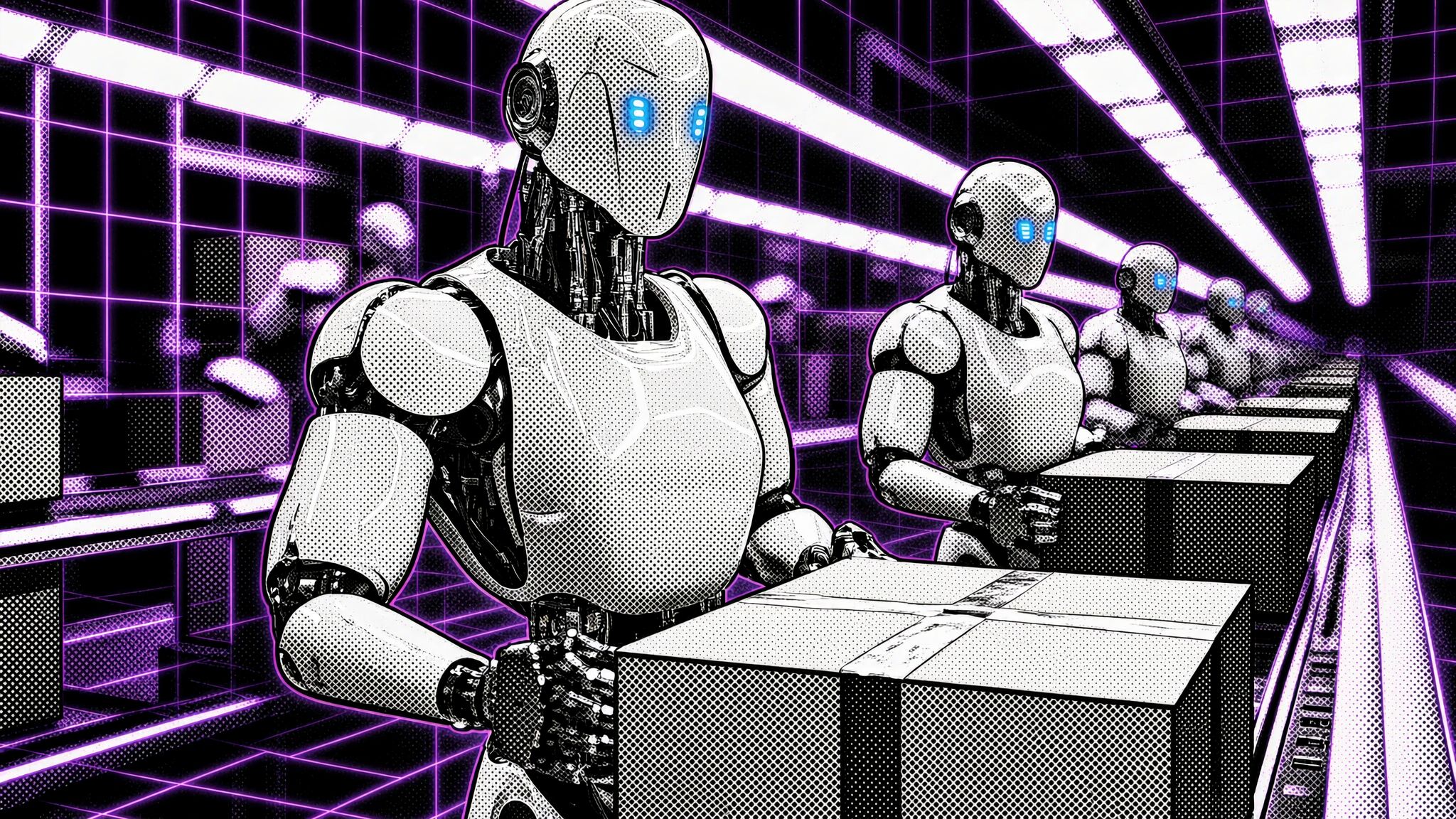
At the 100th Origin Space themed seminar and industry matchmaking event themed "Let AI Enter the Physical World" held at the West Taihu (Changzhou) AI International Community, Wanghong Technology Chairman Sun Yanlong was invited to join Tsinghua University, Chinese Academy of Sciences, and industry representatives to discuss physical AI's technology breakthroughs and industrial applications. Sun Yanlong raised in the exchange: after entering real industrial scenarios, can robots actually work—how accurately and how fast. The real industrial environment is far more complex than laboratories—smoke, dust, occlusion, strong light, and unstable networks can all affect robot perception and judgment.
对此,当虹科技探索了“自主作业加远程接管”的技术路径。以工业巡检为例,机器人自主完成常规巡检任务,遇到复杂、危险或突发情况时,再由远端操作员介入,负责异常处置与安全兜底。孙彦龙表示,要让机器人真正实现自主作业,需要解决感知、理解和决策三个方面的问题。去年,公司把战略定位为“AI多模态加空间视频加行业”,正是希望通过AI多模态、空间视频等技术,来实现机器人等业务的跃升。
To address this, Wanghong Technology explored a "autonomous operation plus remote takeover" technical path. Taking industrial inspection as an example, robots autonomously complete routine inspection tasks; when encountering complex, dangerous, or emergency situations, remote operators intervene, responsible for exception handling and safety fallback. Sun Yanlong said for robots to truly achieve autonomous operation, three aspects must be solved—perception, understanding, and decision-making. Last year the company positioned its strategy as "AI multimodal plus spatial video plus industry," hoping to achieve leaps in robot and other businesses through AI multimodal and spatial video technologies.
在感知层,多模态感知能帮助机器人在复杂环境下更全面地感知周围情况。比如,当虹科技的机器人多模态感知上装件,可以根据场景搭载可见光、红外摄像头,并接入其他环境传感器,结合AI多模态分析,帮助机器人发现设备异常和潜在风险。在理解层,空间感知、三维重建与世界模型等技术,不仅可以帮助机器人识别眼前有什么,还能进一步理解物体的位置、空间关系,以及动作可能带来的变化,从而为任务规划与自主决策提供支撑。当虹科技正在把传媒文化领域积累的空间视频等技术向机器人领域延伸,为机器人空间感知和远程交互提供技术支持。
On the perception layer, multimodal perception helps robots more comprehensively perceive surroundings in complex environments. For example, Wanghong Technology's robot multimodal perception add-on can carry visible light and infrared cameras based on scenario, connect to other environmental sensors, and combine AI multimodal analysis to help robots discover equipment anomalies and potential risks. On the understanding layer, spatial perception, 3D reconstruction, and world model technologies not only help robots identify what is in front of them but further understand object positions, spatial relationships, and changes that actions may bring, supporting task planning and autonomous decision-making. Wanghong Technology is extending spatial video technologies accumulated in media culture to robotics, providing technical support for robot spatial perception and remote interaction.
在决策层,AI逐步承担路径规划、避障、抓取等任务,并结合环境变化感知、状态预测等技术,减少人工干预。机器人不再需要人控制每一个动作,而是能够自主完成更多常规任务。不过,机器人自主能力的提升,并不意味着人可以完全退出作业过程。在复杂工业场景中,仍应坚持Human-in-the-Loop的人机协同理念,确保人在关键决策和异常处置中能够有效介入。孙彦龙认为,远程遥操不仅能在关键时刻提供人工接管和安全兜底,还可以为物理AI提供宝贵的真实交互数据。通过远程遥操,机器人可以在真实工业场景中采集视觉、空间、操作动作及环境反馈等多模态数据,并为物理AI模型的训练和迭代提供支撑。
On the decision layer, AI gradually undertakes path planning, obstacle avoidance, grasping, and other tasks, combined with environmental change perception and state prediction to reduce manual intervention. Robots no longer need humans to control every action but can autonomously complete more routine tasks. However, improved robot autonomy does not mean humans can completely exit the operation process. In complex industrial scenarios, the Human-in-the-Loop human-machine collaboration concept should still be upheld, ensuring humans can effectively intervene in key decisions and exception handling. Sun Yanlong believes remote teleoperation not only provides manual takeover and safety fallback at critical moments but also provides valuable real interaction data for physical AI. Through remote teleoperation, robots can collect multimodal data including vision, space, operation actions, and environmental feedback in real industrial scenarios, supporting physical AI model training and iteration.
随着物理AI能力不断提升,机器人有望自主完成更多任务,减少对人工的依赖,远程作业将从一人一机逐步走向一人多机。目前,当虹科技机器人业务也在朝着这个方向演进,从最初的BlackEye Vision机器人遥操系统,到多模态感知、AI识别、多机协同与数据闭环等能力,一体化的解决方案正在支撑更多机器人进入真实场景干活。
As physical AI capabilities continuously improve, robots are expected to autonomously complete more tasks and reduce dependence on manual labor; remote operations will gradually move from "one person, one machine" to "one person, multiple machines." Currently, Wanghong Technology's robot business is also evolving in this direction—from the initial BlackEye Vision robot teleoperation system to multimodal perception, AI recognition, multi-machine collaboration, and data closed loops; integrated solutions are supporting more robots entering real scenarios to work.
当虹科技这个案例,和前面讨论的FDE逻辑是同一个方向的两种表现。前面讨论过具身智能卖的不是机器人,是一个永远调不完的适配,落地的最后一公里靠的是第三方FDE交付团队,他们驻场、发掘需求、喂数据、把通用机器人培训成某一条产线的专业技工。当虹科技走的是另一条路,它不做第三方交付,而是把感知、理解、决策这三层能力做成一体化解决方案,直接卖给机器人厂商或终端客户。但两条路的底层逻辑是一致的,真实工业场景比实验室复杂得多,机器人能不能干活,不取决于模型有多聪明,而取决于它能不能在烟雾、粉尘、遮挡、强光、不稳定网络这些真实条件下稳定工作。当虹科技提出的自主作业加远程接管,本质上是在承认现阶段机器人自主能力有限的前提下,用人在回路的方式补上最后一段。
Wanghong Technology's case is two manifestations of the same FDE logic discussed earlier. Earlier we discussed that embodied intelligence sells not a robot but an adaptation that never finishes tuning; the last mile of deployment relies on third-party FDE delivery teams who work on site, discover needs, feed data, and train general robots into specialized technicians for a specific production line. Wanghong Technology takes another path—it does not do third-party delivery but builds perception, understanding, and decision-making into integrated solutions sold directly to robot manufacturers or end customers. But the underlying logic of both paths is consistent—real industrial scenarios are far more complex than laboratories; whether robots can work does not depend on how smart the model is but on whether it can operate stably under real conditions including smoke, dust, occlusion, strong light, and unstable networks. Wanghong Technology's "autonomous operation plus remote takeover" essentially acknowledges that at this stage robot autonomy is limited, using human-in-the-loop to fill the last stretch.


